|

Welcome to The |
Message from the President
Welcome to the online home of the California Association of Professional Music Teachers (CAPMT), your MTNA affiliate here in California! This site is your primary resource for important updates on membership, student programs, and other events. Please be sure to renew your membership in both MTNA and CAPMT to stay connected! We warmly encourage new and returning members to participate in local and state events, and are especially excited to continue expanding our community of educators in orchestral instruments, voice, and composition. Your involvement helps shape the vibrant future of our organization. I am deeply honored to serve as your CAPMT President for the 2025–2027 term. Thank you for placing your trust in me—I look forward to meeting and working together with many of you in the coming months! A heartfelt thank-you goes to all those serving on the 2025–2027 Executive Board, District Directors, and Event Chairs—your dedication and service make everything we do possible, and I am so grateful for your time and effort. I would like express my sincerest gratitude to Mitzi Kolar, whose exceptional leadership as CAPMT President from 2023 to 2025 has inspired and uplifted us all. Her mentorship and guidance have strengthened our organization and the community at large, and we are fortunate to have her continued presence on the Board as Immediate Past-President. To all Board Members, District Directors, Event Chairs, and Chapter Presidents concluding their service—thank you for your outstanding contributions and commitment. Please mark your calendars for our upcoming 2025 State Conference at California State University, Fresno on October 24–25! You can register by clicking the button on the right side of this page. In addition to the Conference, many wonderful events are planned throughout the year at both the state and local levels. Please check this website regularly for updates, and we encourage you to also check your own CAPMT chapter website for details about local events in your area. Wishing you all a wonderful year ahead with CAPMT! Warmly,Michael Krikorian CAPMT President Join CAPMT TodayJoin us and boost your career!Enjoy the benefits of a professional support system, including programs for your students, teaching resources, and much moreJoin Now
| 2026 CAPMT State ConferenceOctober 10-11, 2026 (Saturday and Sunday) Pasadena Conservatory of Music
Registration will open soon! |
 Dear CAPMT Members,

Dr. J. Mitzi Kolar2025 Lifetime Achievement Award Recipient
Dr. J. Mitzi Kolar, Professor of Music Emerita, School of Music and Dance, San Diego State University, served as Director of Graduate Studies in Music and Coordinator of Piano. During her tenure at San Diego State, Kolar taught piano performance, class piano, piano pedagogy, and graduate research. Overseeing and advising graduate theses, lecture recitals, and solo performances, Professor Kolar chaired numerous graduate committees in piano, guitar, voice, jazz, musicology, and ethnomusicology. In the 1980s, Dr. Kolar designed and implemented a successful Master of Arts degree in piano pedagogy for the SDSU School of Music that enrolled numerous regional, national, and international graduates, many of whom continue to teach in San Diego and across the U.S. where they serve in community colleges, universities, and leadership positions. Serving as Assistant Chair, Kolar guided the SDSU School of Music through the National Association of Schools of Music (NASM) and the Western Association of Colleges and Universities (WACS) accreditation reviews as well as campus reviews. Kolar received numerous grants in her SDSU tenure including from the Roland Corporation US, and the National Science Foundation, SDSU Ed Center of Computational Science and Engineering, to design the use of computers in the evaluation of college class piano. She received the SDSU Monty Award in 1997, which recognizes individuals who have made a significant contribution to the University, the San Diego Community, and California, nationally and internationally. Her major publications include Music in Education, Yamaha Corporation, a keyboard-based, 3000-page K-8 curriculum using specially engineered keyboards with a Mac controller to allow for peer interaction and digital student feedback and evaluation. According to data gathered by Yamaha, the curriculum reached over six million children in the United States, Canada, and around the globe. Celebrate Piano, Stipes Publishing LLC, originally published by Frederick Harris Music, Toronto, Canada, served as the entry level into the Royal Conservatory of Music examinations and continues to be used by teachers in the U.S., Canada, and other countries. With creativity and improvisation as important interests during her career, Dr. Kolar, with co-author Bill Ramal, developed one of the initial five-book improvisation series for beginning piano students for Charles Hansen Music, which was later acquired by Warner Brothers Publications. Working with Ross Lee Finney, Dr. Kolar recorded Finney's Youth's Companion, C.F. Peters, New York, with an accompanying audio master class. Professor Kolar performed or presented workshops and master classes throughout the U.S. and internationally, including the University of Helsinki, Finland, where she was a guest professor, and numerous universities and conservatories throughout China. Besides several presentations at MTNA conferences, Music Educators National Conference, the College Music Society, and the National Conference on Piano Pedagogy where she served as the Chair of the Liaison between Piano Pedagogy and Music Publishers and later as Chair of the Technology Committee, Professor Kolar (NCTM) was a member on the MTNA Conference Planning Committee for the national conferences in Los Angeles and Nashville, the MTNA Task Force on Technology, and a clinician for the MTNA Group Piano Seminars. Dr. Kolar served as the CAPMT (MTNA Affiliate) President 2023-2025, President-Elect 2021-2023, District 1 Director 2016-2021, the CAPMT State newsletter editor, and the State Chair of MTNA Competitions. Professor Kolar continues as CAPMT Immediate-Past President and on the Editorial Committee of CAPMT Connect. She is also the Immediate Past-President and Chair of the Aspen Music Award of The Musical Merit Foundation of Greater San Diego, the largest music scholarship endowment in San Diego, and serves on the board of directors of the Goodlin Foundation. In MTAC, Kolar has served as President, 1st Vice President, and Director of the San Diego Branch. Throughout her career and currently, Dr. Kolar maintains an independent piano studio. In retirement, she continues to serve music and music organizations but loves to split her time between homes in California and Montana, to travel, and to enjoy her family and friends. Jon Nakamatsu2025-2026 CAPMT Teacher of the Year
Now in his third decade of touring worldwide, American pianist Jon Nakamatsu continues to draw critical and public acclaim for his intensity, elegance and electrifying solo, concerto and chamber music performances. Catapulted to international attention in 1997 as the Gold Medalist of the Van Cliburn International Piano Competition—the only American to achieve this distinction since 1981—Mr. Nakamatsu subsequently developed a multi-faceted career that encompasses recording, education, arts administration and public speaking in addition to his vast concert schedule. Mr. Nakamatsu has been a guest soloist with over 150 orchestras worldwide, including those of Baltimore, Berlin, Boston, Cincinnati, Dallas, Detroit, Florence, Los Angeles, Milan, San Francisco, Seattle, Tokyo and Vancouver. He has worked with such esteemed conductors as Marin Alsop, Sergiu Comissiona, James Conlon, Philippe Entremont, Hans Graf, Marek Janowski, Raymond Leppard, Gerard Schwarz, Stanislaw Skrowaczewski, Michael Tilson Thomas and Osmo Vänskä. As a recitalist, Mr. Nakamatsu has appeared in New York City’s Carnegie Hall and Lincoln Center, Washington DC’s Kennedy Center for the Performing Arts, the Musée d’Orsay and the Théâtre du Châtelet in Paris and in major centers such as Boston, Chicago, Houston, London, Milan, Munich, Prague, Singapore, Tokyo, Warsaw and Zurich. In Beijing he has been heard at the Theater of the Forbidden City, the Great Hall of the People, China Conservatory, and the National Centre for the Performing Arts. His numerous summer engagements included appearances at the Aspen, Tanglewood, Ravinia, Caramoor, Vail, Wolftrap, Colorado, Brevard, Britt, Colorado College, Evian, Interlochen, Klavierfestival Ruhr, Santa Fe and Sun Valley festivals. In 2025 he will participate in an extended residency at the Bowdoin Festival in Maine and return to the Chautauqua Institution in New York where he served as Artist in Residence from 2018 to 2023. In 2025 Mr. Nakamatsu will also serve on the juries of the Van Cliburn International Piano Competition and the United States Chopin Piano Competition. Post-Pandemic, Mr. Nakamatsu returned to live performances in 2021 throughout the United States and in Europe. Between 2020 and the spring of 2021, he was engaged in a myriad of online events including recording, masterclasses and virtual interviews and lectures for organizations such as the Chautauqua Institution Piano Festival, Colorado College Summer Music Festival, Boston University’s Tanglewood Institute, the Van Cliburn Foundation and the Chopin Foundation of the United States. In collaboration with clarinetist Jon Manasse, Mr. Nakamatsu also produced and curated an online series of interviews and historical performances taken from the archives of the Cape Cod Chamber Music Festival, where he and Mr. Manasse have served as Artistic Directors since 2007. With clarinetist Jon Manasse, Mr. Nakamatsu tours as a member of the Manasse/Nakamatsu Duo. Following its Boston debut in 2004, the Duo released its first CD for harmonia mundi usa (Brahms Sonatas for Clarinet and Piano) which received the highest praise from The New York Times Classical Music Editor James Oestreich, who named it among the “Best of the Year” for 2008. A frequent chamber musician, Mr. Nakamatsu has collaborated repeatedly with ensembles such as the Emerson, Escher, Jupiter, Miró, Modigliani, Prazak, St. Lawrence, Tokyo and Ying string quartets, the Imani Winds and the Berlin Philharmonic Wind Quintet with whom he made multiple tours beginning in 2000. Mr. Nakamatsu’s 13 CDs recorded for harmonia mundi usa have garnered extraordinary critical praise. An all-Gershwin recording with Jeff Tyzik and the Rochester Philharmonic Orchestra featuring Gershwin’s Rhapsody in Blue and Concerto in F remained in the top echelons of Billboard’s classical charts for over six months. Other acclaimed discs include the recording premiere of Lukas Foss’ first Piano Concerto with Carl St. Clair and the Pacific Symphony, the Brahms Piano Quintet with the Tokyo String Quartet in the quartet’s final recording as an ensemble, and a solo recording including Robert Schumann’s Second Piano Sonata whose YouTube posting has garnered over 800K hits. Mr. Nakamatsu has been profiled extensively in print, radio, television and online. He has appeared on CBS Sunday Morning, in Readers Digest magazine and recently on Live from Here! with Chris Thile. In 1999, Mr. Nakamatsu performed at the White House at the special invitation of President and Mrs. Clinton. He has also performed for the United States Mayor’s Convention in San Francisco and in 2001 was the featured guest artist during the opening and dedication of the Japanese American Memorial to Patriotism During World War II in Washington DC. A former high school teacher of German with no formal conservatory training, Mr. Nakamatsu studied privately with Marina Derryberry for over 20 years beginning at the age of six; worked with Karl Ulrich Schnabel since the age of 9; and trained for 10 years in composition, theory and orchestration with Dr. Leonard Stein of the University of Southern California’s Schoenberg Institute. Mr. Nakamatsu holds undergraduate and graduate degrees from Stanford University in German Studies and secondary education. In 2015, he joined the piano faculty of the San Francisco Conservatory of Music and in 2023 the Department of Music at Stanford University as a Visiting Artist. He lives in the Bay Area with his wife Kathy and young son Gavin. Craig Richey
2024 CAPMT MTNA Foundation Fellow |


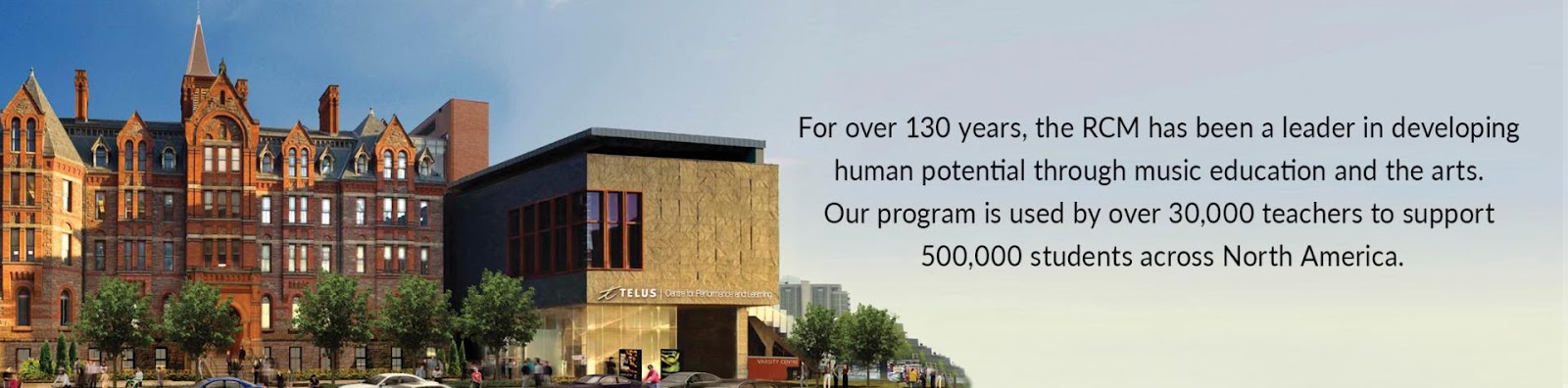
We are proud to have RCM as our Lead Website Sponsor
|